Direct answer
Before specifying a villa waterproofing repair, investigate the symptom, likely water source, travel path, construction build-up, drainage conditions and the extent of affected material. Record when the issue appears, whether it follows rain or normal use, and what previous repairs exist. Then agree a controlled opening-up and test plan with the appropriate specialist. The repair scope should follow evidence. Choosing a coating first and looking for somewhere to apply it risks treating the visible stain while leaving the actual entry point untouched.
Distinguish the source from the symptom
A mark on an internal wall can be related to an external threshold, roof or balcony edge, plumbing service, air-conditioning condensate, joint failure or moisture already held in the construction. Location alone does not prove cause. Build a timeline: first observation, weather, room use, shut-down periods, odour, visible changes and earlier maintenance. Ask whether the mark grows, dries or migrates. This information helps a specialist choose meaningful checks instead of opening large areas without a hypothesis.
Map the construction and drainage route
Obtain available drawings, product records and previous repair information, then compare them with what is actually built. At a terrace or wet-area interface, the review may need to consider finished levels, falls, outlets, overflows, door tracks, upstands, penetrations, movement joints and the connection between horizontal and vertical layers. The drawing is a starting point, not proof of site conditions. Where the build-up is unknown, controlled opening-up should be planned and carried out by competent parties with the surrounding finishes and services protected.
Create an evidence plan before destructive work
Start with non-destructive observations and measured records, then escalate only where needed. Mark each inspection point on a simple location plan and photograph it consistently. Moisture readings are useful for comparison when the instrument, material and method are recorded, but a single reading does not identify the source. Any water testing, access at height, opening of building fabric or work near electrical services should be designed and supervised by the relevant appointed specialists rather than treated as a homeowner procedure.
- Symptom map with dates and weather or use conditions
- Photographs from fixed viewpoints
- Drain, joint and threshold condition observations
- Comparable readings at affected and unaffected locations
- Previous repair boundaries and material information
- Agreed opening-up locations and protection measures
Define the repair boundary and interfaces
Waterproofing needs continuity. A proposed local repair should explain how new material connects to the sound retained system and where the connection can be inspected. The scope should identify substrate preparation, compatible materials, terminations, penetrations, protection and reinstatement. It should also separate waterproofing from adjacent responsibilities such as door-frame work, drainage modification, stone removal or painting. Dubai Municipality states that the Dubai Building Code unifies minimum building requirements relating to health, safety, welfare, convenience and sustainability; the applicable solution still needs project-specific professional assessment.
Planning example
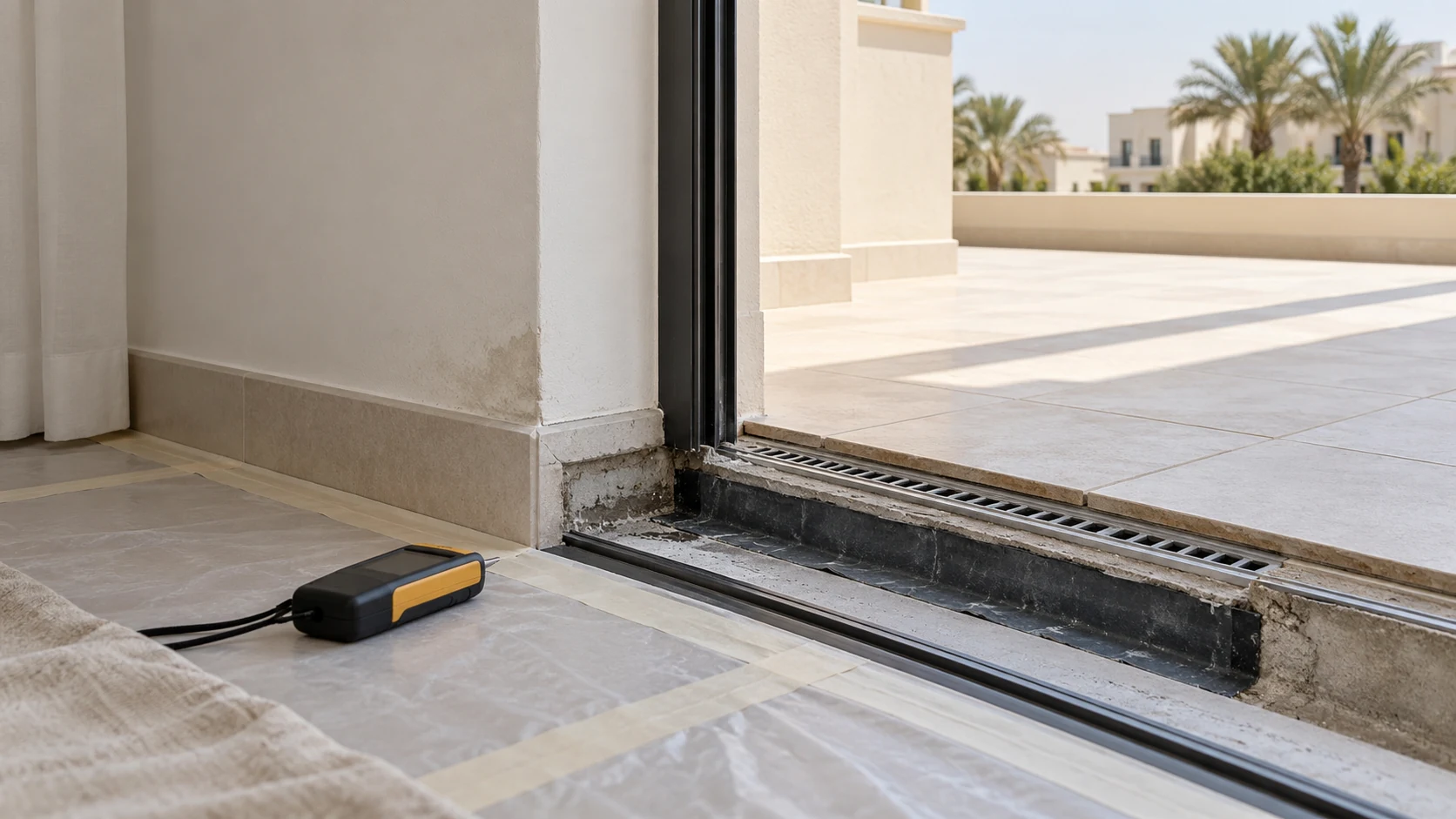
Planning example: staining appears beside a sliding door after wind-driven rain, but not during normal terrace washing. The inspection records the pattern, checks outlet condition and levels, reviews the door-track drainage path and compares moisture readings at the jamb, sill and an unaffected area. A small protected opening confirms the local build-up before repair details are finalised. The resulting scope separates door-threshold sealing, waterproofing continuity, outlet cleaning and internal finish reinstatement. The test and acceptance method is agreed before the work is concealed.
Write the quotation around stages and hold points
A comparable quotation should describe investigation assumptions, access, removal, preparation, repair material, application extent, interfaces, test method, protection, reinstatement and exclusions. Use hold points so concealed work is reviewed before the next layer covers it. Request product data and compatibility confirmation from the responsible supplier or specialist, but do not treat a product warranty statement as proof that the diagnosis or installation scope is correct. Photograph the prepared substrate, terminations and finished layer for the property record.
- Confirmed working area and access method
- Items removed, retained and protected
- Substrate acceptance criteria
- System components and interface details
- Inspection and test hold points
- Drying or curing conditions stated by the supplier
- Reinstatement boundary and final handover records
Limitations and urgent conditions
This planning framework cannot diagnose a specific leak remotely. Active water near electrical equipment, unsafe ceilings, unstable finishes, mould concerns or significant structural movement require prompt isolation of the area and qualified professional assessment. Do not drill, flood-test or dismantle concealed work without checking services and the required controls. Weather-dependent symptoms may take more than one observation cycle to confirm, and intermittent plumbing or condensate issues can mimic failed external waterproofing.
Next step
Prepare a short evidence pack before requesting repair prices: symptom timeline, marked photographs, available drawings, previous repair notes and the suspected interfaces. Ask the appropriate specialist to confirm the investigation stages, safe opening-up plan, repair boundary, compatibility evidence and test hold points. A concise cause-first brief gives quotations a common basis and makes it easier to distinguish investigation, repair and reinstatement rather than comparing one-line promises.
Sources & further reading
Make this useful for your project.
A review of your property and priorities can turn general guidance into a defined brief.
Explore Villa waterproofingDiscuss your project